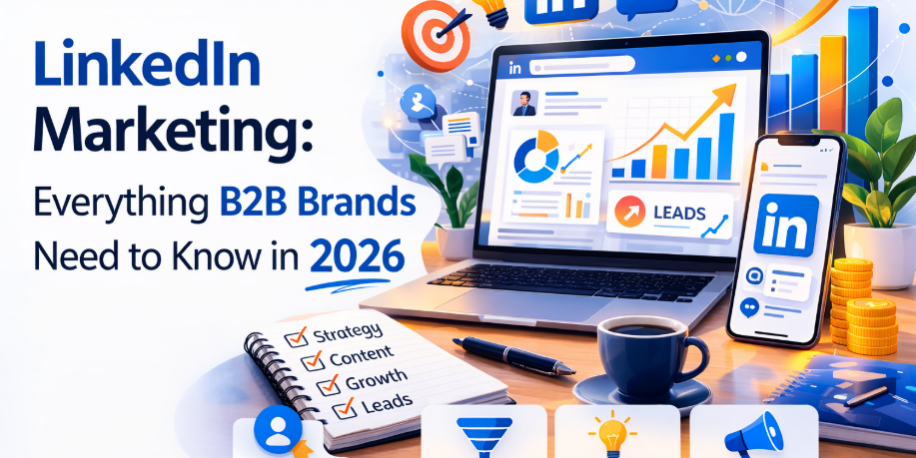
LinkedIn Marketing: Everything B2B Brands Need to Know in 2026
If you’re exploring LinkedIn marketing, chances are one of these thoughts is running through your mind right now:
- “LinkedIn clearly works… for everyone except us.”
- “Our competitors are all over LinkedIn. How?”
- “Should we invest more time into LinkedIn marketing or focus elsewhere?”
Welcome. You’re asking the right questions.
LinkedIn has quietly become the most powerful platform for B2B demand generation, but only when it’s used strategically. Companies that treat LinkedIn like another social media platform often struggle. Brands that understand how LinkedIn marketing actually works turn it into a consistent pipeline of leads, conversations, and partnerships.
In this guide, we’ll break down what LinkedIn marketing really involves, why it works so well for B2B brands, and how businesses can use it effectively.
What Is LinkedIn Marketing?
At its core, LinkedIn marketing is the process of using LinkedIn to build brand authority, generate demand, and attract qualified business opportunities.
Unlike other platforms where entertainment dominates, LinkedIn rewards:
- Expertise
- Industry insights
- Thought leadership
- Professional credibility
Effective LinkedIn marketing typically involves:
- Personal branding for founders and leadership teams
- Strategic content creation
- Community engagement
- LinkedIn advertising
- Lead generation strategies
The goal isn’t simply posting content. The goal is building trust with the right audience until conversations naturally turn into business opportunities.
Why LinkedIn Marketing Works So Well for B2B Brands
LinkedIn dominates B2B marketing because it aligns with how modern buyers evaluate expertise and make decisions.
Here’s what makes LinkedIn unique.
1. Expertise Is the Currency
On LinkedIn, insight beats entertainment. Professionals follow people who help them understand trends, challenges, and opportunities in their industry.
2. Trust Builds Faster
Instead of cold outreach, LinkedIn marketing allows potential buyers to see your ideas, your expertise, and your credibility before they ever speak with you.
3. Decision-Makers Are Active
LinkedIn remains the only major platform where CEOs, founders, marketers, investors, and operators actively participate in conversations.
4. Founder-Led Content Performs Best
Posts written by founders and leadership teams often perform 3–5x better than brand-page content.
5. Organic and Paid Strategies Work Together
LinkedIn marketing works best when organic content and paid advertising support each other.
This combination allows brands to build awareness, trust, and demand simultaneously.
Key Elements of a Successful LinkedIn Marketing Strategy
Brands that succeed on LinkedIn rarely rely on random posting. Instead, they build a structured LinkedIn marketing strategy.
Here are the most important components.
1. Clear Positioning
Most brands struggle on LinkedIn because they lack clarity.
Your audience should immediately understand:
- What problem you solve
- Who you help
- Why your perspective matters
Strong positioning turns ordinary content into authority-building content.
2. Consistent Content Creation
Content is the engine behind LinkedIn marketing.
Common high-performing formats include:
- Educational posts
- Founder stories
- Carousels
- Industry insights
- Case studies
- Contrarian perspectives
The goal isn’t simply to post frequently. The goal is to share ideas that your audience finds valuable.
3. Founder and Executive Personal Branding
People connect with people not logos.
That’s why many successful LinkedIn marketing strategies focus on founder-led content.
When founders consistently share insights, lessons, and opinions, they naturally build:
- Authority
- Trust
- Visibility
- Conversations with potential buyers
4. Strategic Engagement
Posting content is only part of LinkedIn marketing.
Equally important is:
- Engaging with industry conversations
- Commenting thoughtfully on relevant posts
- Responding to discussions in your niche
This increases visibility and strengthens relationships within your industry.
5. LinkedIn Advertising
LinkedIn ads allow brands to scale what’s already working organically.
Common LinkedIn advertising strategies include:
- Lead generation ads
- Content amplification
- Webinar promotion
- Account-based marketing campaigns
When executed correctly, ads accelerate demand generation.
Common LinkedIn Marketing Mistakes Brands Make
Even strong companies often struggle with LinkedIn marketing because of a few common mistakes.
Posting Without Strategy
Random posts rarely build authority or generate leads.
Focusing Only on Company Pages
Personal profiles usually outperform brand pages in reach and engagement.
Chasing Viral Posts
Viral content doesn’t always translate into qualified business opportunities.
Ignoring Audience Targeting
Content should speak directly to your ideal customer profile (ICP).
Measuring Vanity Metrics
Impressions and likes don’t matter if conversations and leads aren’t increasing.
Successful LinkedIn marketing focuses on pipeline impact, not just engagement numbers.
Organic vs Paid LinkedIn Marketing
Many brands wonder whether they should focus on organic content or LinkedIn ads.
The best answer is both.
Organic LinkedIn Marketing
Focuses on:
- Authority building
- Thought leadership
- Long-term brand trust
Paid LinkedIn Marketing
Focuses on:
- Reach
- Lead generation
- Campaign testing
- Audience targeting
When organic and paid strategies work together, brands create a compounding visibility effect.
Your ideal customers see your insights, your content, your ads, and your case studies repeatedly, making your brand the obvious choice when they need your solution.
How Spacebar Helps Brands Succeed With LinkedIn Marketing
While many companies attempt LinkedIn marketing internally, executing it consistently and strategically requires expertise.
At Spacebar, the LinkedIn marketing agency focuses on three key pillars:
- Strategy First
Every engagement starts with defining the brand narrative, ideal customer profile, and content positioning.
- High-Quality Content
The goal isn’t generic posts, it’s thought leadership that reflects the founder’s voice and expertise.
- Demand Generation
Content, engagement, and LinkedIn ads are aligned to create real conversations that convert into business opportunities.
This approach helps brands transform LinkedIn from a social platform into a revenue channel.
Final Thoughts
LinkedIn marketing has become one of the most effective growth channels for B2B companies.
When done correctly, it helps brands:
- Build authority in their industry
- Attract the right audience
- Generate meaningful conversations
- Turn visibility into revenue
The companies that win on LinkedIn aren’t necessarily the loudest; they’re the ones that consistently share valuable insights, clear positioning, and authentic perspectives.
FAQs
What is LinkedIn marketing?
LinkedIn marketing is the practice of using LinkedIn to build brand authority, engage professional audiences, and generate business opportunities.
Is LinkedIn marketing effective for B2B?
Yes. LinkedIn is widely considered the most effective platform for B2B marketing because it connects businesses directly with decision-makers.
How often should businesses post on LinkedIn?
Most successful brands post 2–4 times per week, focusing on valuable and insightful content.
Does LinkedIn marketing require paid ads?
No, but paid ads can significantly amplify organic reach and accelerate lead generation.
How long does LinkedIn marketing take to show results?
Most brands begin seeing measurable traction within 45–90 days with consistent execution.